
Nienke Stoop: How the beginning of your life can influence your health
Fear and trauma: when there is more at play than just physical complaints – a conversation with David Euler
Why is self-cultivation relevant to acupuncturists? An interview with Dianne Sommers
How can we stay vital and active throughout our lives? - A conversation with Alex Tiemes
‘Keep moving as broadly as possible. You'll benefit from it your whole life.’
During the Acupuncture Week 2026, the theme Vital Through Life with Acupuncture will be central. We will show how Chinese medicine views health and vitality at different stages of life.
Movement plays an important role in this. But what does our body need to remain active and vital from childhood to old age? And what can Traditional Chinese Medicine (TCM) add to our perspective on movement? Not just for athletes, but for everyone who wants to age healthily and vibrantly.
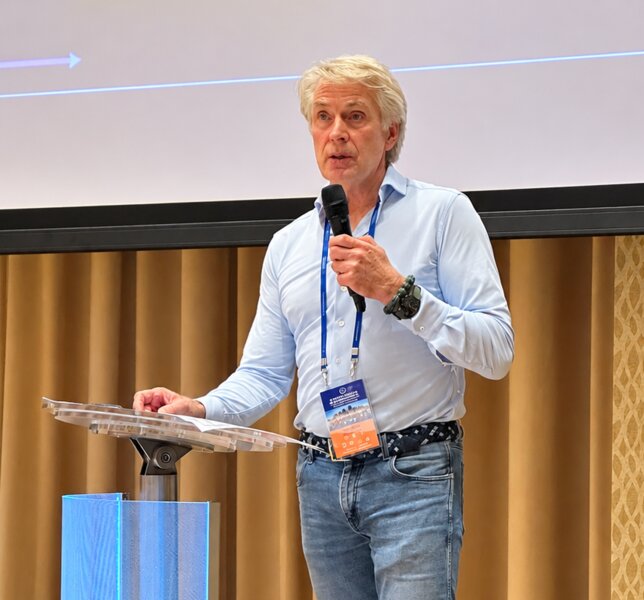
We asked Alex Tiemes, physiotherapist, manual therapist, and Traditional Chinese Medicine practitioner. Alex has 44 years of experience in clinical practice, education, and research. He guides top athletes and collaborates with medical institutions and universities in China, where the connection between Western and Chinese medicine is central.
During the Acupuncture Week, Alex will provide a Webinar on Multidisciplinary Treatment and Vital and Active Movement, especially for NVA members. We asked him about his views on movement at different stages of life.
Everyone knows that movement is healthy. Yet, it's not a given for everyone. How do you view this?
Alex: The motivation to move varies greatly. An enthusiastic athlete enjoys their sport, while someone who rarely moves might feel tired just thinking about it.
I believe we shouldn't ask how to get people to exercise, but rather how to entice them to become active. Enjoyment and social connections are much more important than performance. A conversation that you would normally have on the couch with a cup of coffee can also take place during a walk. With that coffee afterward.
How does Traditional Chinese Medicine view the importance of movement?
Alex: In TCM, we look at the person as a whole. According to this teaching, movement supports the circulation of Qi, our life energy, as well as blood and bodily fluids.
In Western medicine, we know that movement stimulates circulation and metabolism, among other things. The explanations differ, but there are overlaps. What I find interesting is that you can compare insights from both medical systems. You don't have to speak the same language as long as you understand what the other means.
You emphasize that we should listen to our bodies. How do you do that?
Alex: That's harder than it sounds. Our body speaks its own language, so to speak. Even experienced athletes don't always understand it well. When can you push harder, and when is it wiser to rest?
My advice for those starting to move is to simply get moving, without performance pressure. Walking, swimming, as long as it's easy to do. If you feel good and refreshed afterward, then the effort likely suited you well. If you're very tired, your body may need more recovery. It's about a good balance between activity and rest.
But, the need for movement may also vary throughout your life…
Alex: Absolutely. Every life stage has its own characteristics. Children have energy that bursts in all directions. They run, jump, climb, and move in various ways. From the TCM perspective, you can see this as Qi developing in different directions.
Therefore, let children experience as many sports and games as possible. Not just soccer or badminton, but both… and.
As children grow older, their energy becomes more focused. In TCM, you can describe this as Qi becoming more directed. Young people develop preferences and may choose a specific sport. But I would encourage maintaining that versatility for as long as possible. This helps develop a broad foundation.
Why is that versatility so important later in life?
Alex: Because our body benefits from variety. This applies even to top athletes. A football player can learn a lot from ballet. The balance and body control they develop can help them avoid a tackle. A shot putter can benefit from exercises on a balance beam.
I call this ‘borrowing sports’: using movements from other sports to broaden your own physical capabilities. Even as we age, that variety remains important. By moving in diverse ways, we maintain our balance, coordination, and mobility. This contributes to our vitality and helps us move safely and independently.
You combine physiotherapy with Chinese medicine and advocate for multidisciplinary collaboration. What is the added value of this?
Alex: As a physiotherapist, I look at muscles, joints, and movement patterns. From the perspective of Chinese medicine, I also consider meridians, the pathways through which Qi flows according to this teaching, and the interconnection between different bodily functions.
I sometimes say that a TCM professional should actually sit next to the coach on the bench. On the other side sits the physiotherapist. The coach knows how someone trains and moves. The physiotherapist looks at the physical load. As a TCM professional, you can view that information through your knowledge of meridians and the interconnections in the body.
By observing together, asking questions, and exchanging information, you gain a broader picture of the person and any recurring complaints. You don't always need to feel a pulse or examine a tongue for that.
I find it important to translate insights from Chinese medicine into a language that other healthcare providers understand. In my experience, this creates much more mutual understanding.
What would you particularly like to convey to people about movement and aging vibrantly?
Alex: Explore different activities, find something you enjoy, and do it with others. It doesn't have to be complicated or performance-oriented. Keep moving as broadly as possible. This gives you the best chances of remaining vital and active even in later life.
Discover more during the Acupuncture Week
What does it mean to live vibrantly, and what role can acupuncture play in that? Discover more about the perspective of Chinese medicine on health and well-being at different life stages during the Acupuncture Week.
